Septic Tank Pumping in New Braunfels
Septic tank pumping service in New Braunfels and nearby towns. Learn the warning signs, what a pump-out involves, and how local clay soil changes the timing.
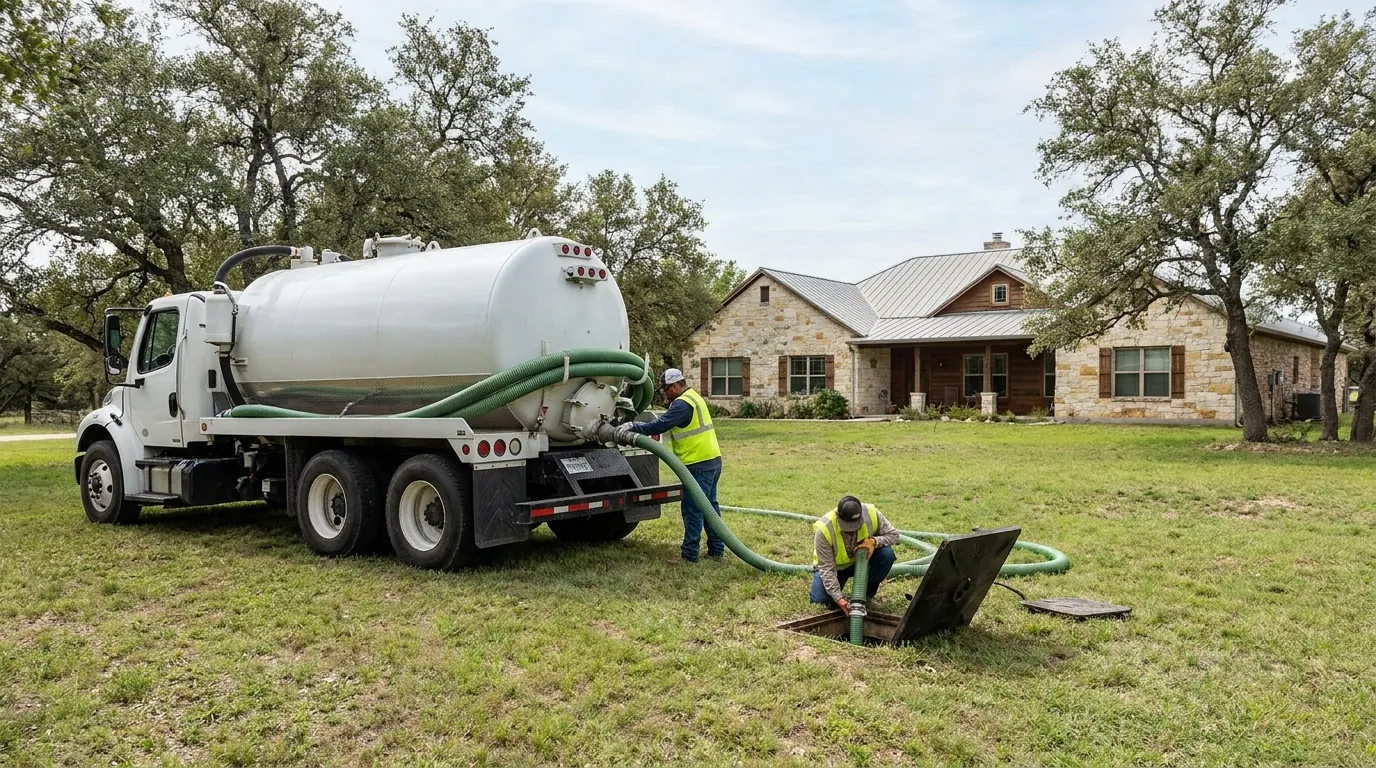
When a tank needs pumping
Every septic tank fills with two things it can't process on its own: a layer of scum that floats and a layer of sludge that settles on the bottom. Pumping removes both before they crowd out the liquid space the tank needs to separate solids from water. Skip it too long and solids start washing out to the drain field, where they clog the soil and cause failures that cost far more than a routine pump-out.
In New Braunfels the timing question is sharper than it is in most places. The expansive clay soils around here drain slowly, so a drain field that receives solids has little margin before it saturates. Hot summers concentrate household water use, and the sudden storms this area sees can push groundwater up around a tank that's already near capacity. All of that means a New Braunfels tank generally needs closer attention than the same-size tank in sandy country.
Common warning signs are slow drains throughout the house, gurgling toilets, sewage odors near the tank or field, and unusually green, spongy grass over the drain field. If you're seeing any of those, read our guide to signs your septic tank is full and consider a septic system inspection alongside the pump-out.
What a pumping visit involves
A standard septic tank pumping follows the same sequence on most residential systems.
-
Locate and uncover the lids
We find the tank and expose the access lids over both compartments. If risers are installed at grade this is quick; if the lids are buried, we dig down to them.
-
Measure the sludge and scum layers
Before pumping, we check how full the tank actually is. This tells us whether your pumping interval is right or whether something is loading the tank faster than expected.
-
Pump both compartments
The tank is emptied through the vacuum hose, breaking up and removing the scum and settled sludge from each compartment down to the bottom.
-
Inspect what's visible
With the tank empty we look at the inlet and outlet baffles and the tank walls for cracks or root intrusion, and note anything that should be watched or repaired.
-
Backfill and record
We close the lids, backfill, and give you the measured levels so you know when the next service is realistically due.
How local conditions change the job
The clay soils across New Braunfels, Geronimo, and New Berlin hold water, which affects both how fast a field recovers and how deep the tank sits in wet ground. After a run of storms, tanks in low-lying spots can carry higher liquid levels, and a pump-out that would have been routine in July becomes urgent. That's why we measure rather than guess: the layers in the tank tell the real story.
How much a pump-out runs depends on tank size, how long since the last service, and how much digging the lids require. If you want a sense of the drivers before you call, our article on septic tank pumping cost walks through them. For homes on a wooded or older system, pairing pumping with septic tank cleaning removes hardened material a routine pump leaves behind.
Frequently asked questions
How often should a septic tank be pumped in New Braunfels?
Most homes here fall in a three-to-five year range, but the clay soil and household size can shorten that. Measuring the sludge and scum at each visit is the only reliable way to set your interval. See our guide on how often to pump for local specifics.
What are the signs my tank needs pumping now?
Slow drains across the house, gurgling toilets, odors near the tank or drain field, and soggy or bright-green grass over the field all point to a full or overloaded tank. If several show up together, don't wait for the next scheduled service.
Does heavy rain affect when I should pump?
Yes. Saturated clay soil around New Braunfels raises groundwater and reduces how quickly the drain field accepts effluent, so a nearly full tank has less margin during storm season. Pumping before the ground stays wet is often the safer move.
Should I add products to avoid pumping?
No additive removes the solids that settle in the tank. Sludge and scum still have to be physically pumped out, and some products can push solids toward the drain field. Regular pumping remains the reliable approach.
Talk to someone about your job
Call to describe the problem and get a quote for work in New Braunfels, TX.