Septic System Inspection in New Braunfels
Septic system inspection in New Braunfels and nearby towns. Catch tank, baffle, and drain field problems early and understand your septic system repair options.
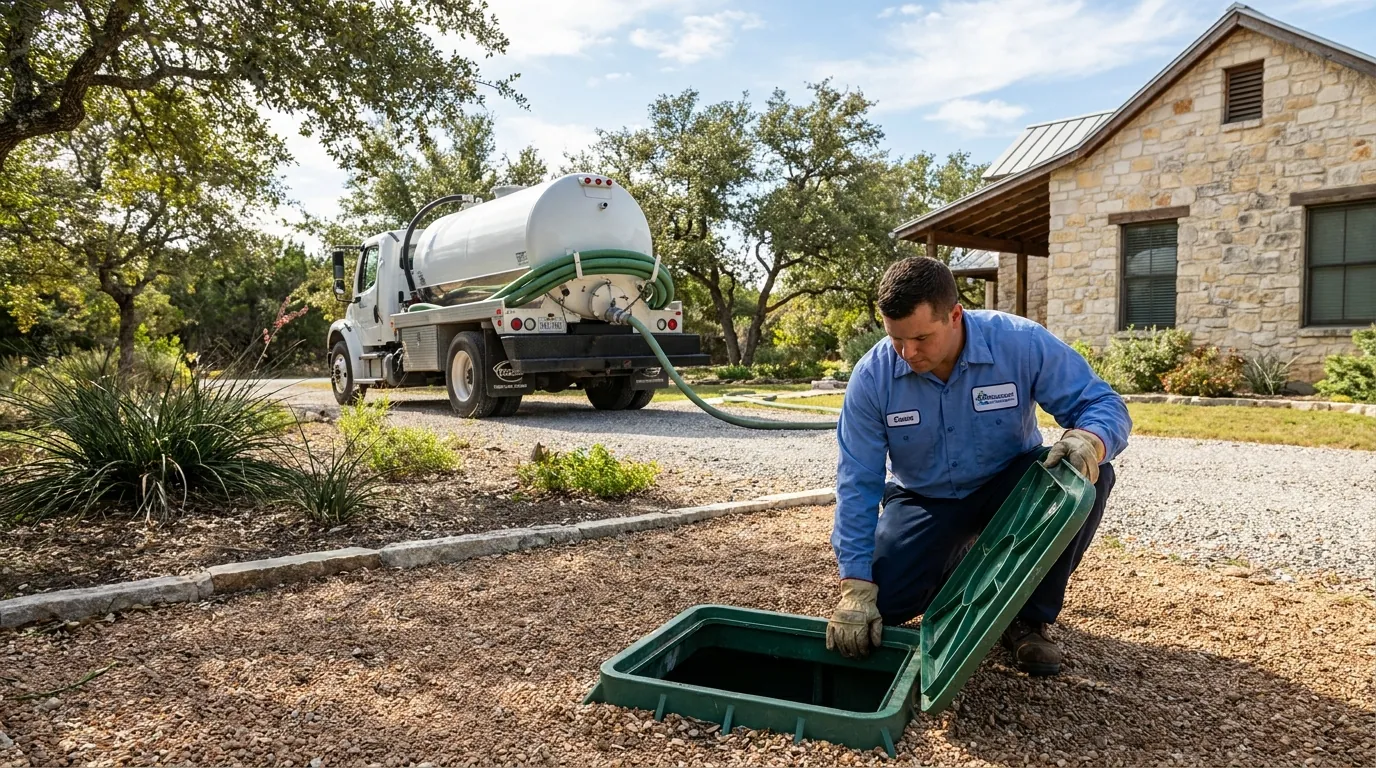
Why inspect a septic system
A septic system is easy to ignore until it fails, and by then the cheapest fix has usually passed. An inspection tells you what shape the tank, baffles, and drain field are actually in — whether a small septic tank repair now will head off a full drain field replacement later. It's also the standard step before buying or selling a home on septic, when nobody wants to inherit a hidden problem.
New Braunfels systems face conditions that reward regular inspection. Expansive clay swells and shrinks with the seasons, which can crack older concrete tanks and stress baffles and inlet lines. Sudden storms raise the water table and test how well the drain field still accepts effluent. Catching a cracked baffle or a saturated field early is the difference between a repair and a rebuild.
Inspection pairs naturally with a pump-out, because an empty tank is far easier to examine. If yours is due, consider scheduling alongside septic tank pumping. Where an inspection points to a struggling field, our drain field service picks up from there.
What an inspection covers
A thorough septic system inspection examines each part of the system in turn.
-
System records and layout
We confirm tank size and the age and layout you know about, and locate the tank and drain field so the inspection matches the actual system in the ground.
-
Tank condition
We check sludge and scum levels, then examine the inlet and outlet baffles, the tank walls, and the lids for cracks, corrosion, or root intrusion.
-
Effluent flow
We look at how water moves from the tank toward the drain field, watching for signs of backup, high liquid levels, or effluent surfacing over the field.
-
Drain field check
We inspect the ground over the field for soft, wet, or odorous areas that suggest the field is saturated or failing to accept effluent.
-
Findings and options
You get a plain-language summary of what's working, what to watch, and what needs attention — with realistic options, not pressure.
Making sense of the findings
Not every finding means a repair. Sometimes the answer is simply a shorter pumping interval; sometimes it's a cracked baffle worth fixing before solids reach the field; occasionally it's a field that needs rest and reduced load. Across New Braunfels, Cibolo, and Seguin, the clay soil means field problems build slowly and then fail suddenly, so an early read gives you time to plan rather than react.
If you're buying a home on septic in the area, an inspection before closing is money well spent — it turns an unknown into a known cost. Whatever the result, you'll leave with a straight picture of the system and a sensible next step, whether that's routine septic tank pumping or a specific septic system repair.
Frequently asked questions
How long does a septic inspection take?
A standard residential inspection usually takes an hour or two, longer if lids are buried and have to be dug out. Pairing it with a pump-out adds time but gives a much clearer view of the empty tank.
Do I need an inspection to buy a home on septic?
It's strongly recommended and often expected. A septic system is a major component, and an inspection turns a hidden risk into a known condition before you close, so you can plan for any repairs.
What kinds of problems does an inspection find?
Common findings include cracked or missing baffles, corroded lids, root intrusion, high liquid levels, and a saturated or failing drain field. Catching these early usually means a smaller repair than waiting until the system backs up.
How does clay soil affect my system?
Expansive clay swells when wet and shrinks when dry, stressing concrete tanks and lines and slowing how fast the drain field drains. That makes regular inspection more valuable here than in sandy areas that drain freely.
Talk to someone about your job
Call to describe the problem and get a quote for work in New Braunfels, TX.