Grease Trap Pumping in New Braunfels
Grease trap pumping for New Braunfels-area kitchens. Regular clean-outs that keep grease out of your lines and system and prevent backups and odors.
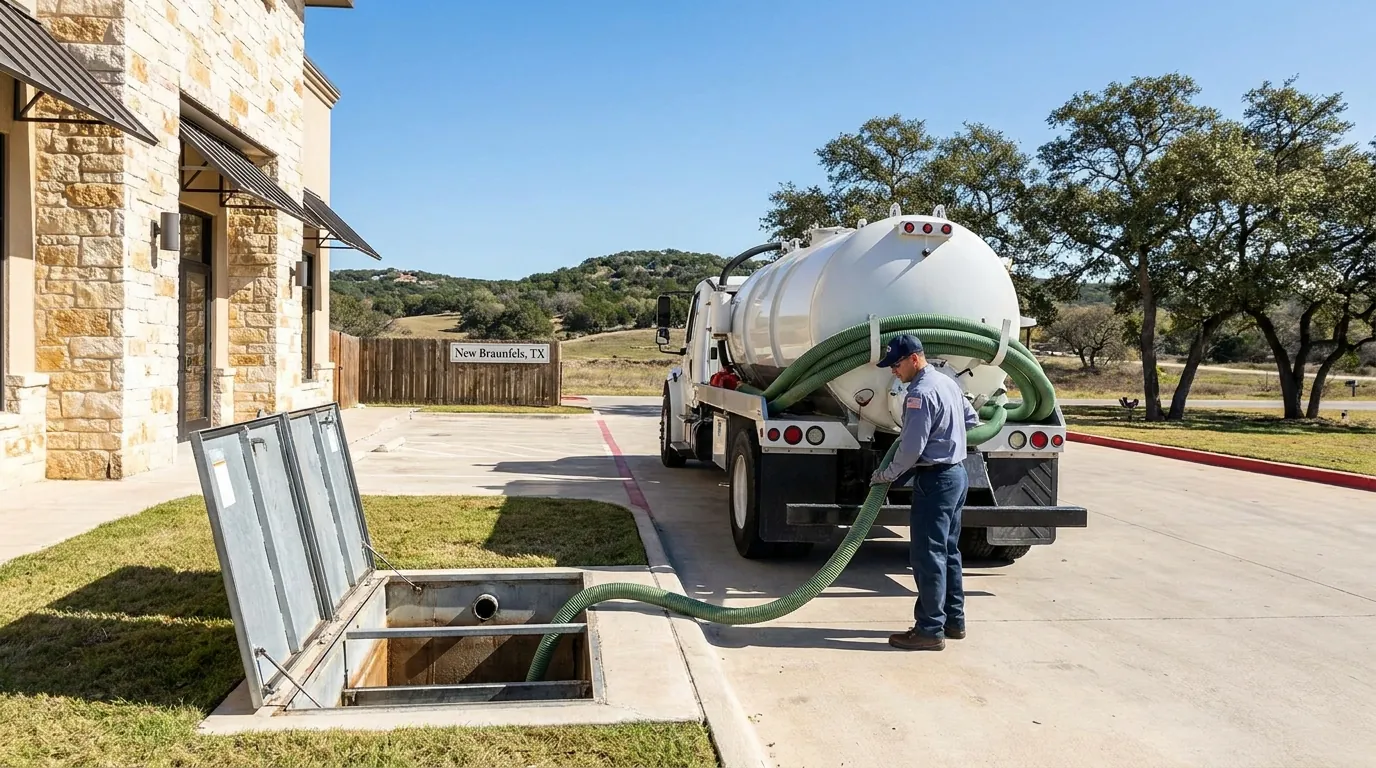
Why grease traps need regular service
A grease trap catches the fats, oils, and grease from a kitchen before they reach your plumbing or septic system, where they harden and choke the lines. The trap only works while it has room to separate grease from water. Once it fills, grease passes straight through, and that's when kitchens see slow drains, foul odors, and backups at the worst possible time — during a busy service.
For any food business on septic around New Braunfels, a clogged line or grease reaching the tank is a double problem: it disrupts the kitchen and it loads the septic system with material it was never meant to handle. Grease that reaches the drain field is especially damaging in slow-draining clay soil. Regular trap pumping keeps the grease contained and out of everything downstream.
If your kitchen shares a septic system, keeping the trap clear directly protects your septic tank pumping schedule and your drain field. When a trap has been neglected and grease has already moved down the line, a septic system inspection helps confirm what reached the tank.
What grease trap pumping involves
A grease trap clean-out follows a straightforward sequence.
-
Open and inspect
We open the trap and check the grease and solids layers along with the condition of the baffles and lid.
-
Pump out the contents
The captured grease, settled solids, and water are removed completely so the trap starts empty.
-
Scrape and clean
We clear grease off the walls, baffles, and lid so the trap can capture at full efficiency again.
-
Check the fittings
We look over the inlet and outlet fittings and baffles for damage that would let grease pass through.
-
Close up and advise
We reassemble the trap and, based on how full it was, suggest a realistic interval so it doesn't overflow before the next service.
Setting a schedule that fits your kitchen
How often a trap needs pumping depends on how much grease your kitchen produces and the size of the trap. A high-volume kitchen fills a small trap fast; a larger trap on a lighter menu lasts longer. Rather than guess, we measure how full the trap is at each visit and set an interval that keeps it well clear of overflowing — while meeting whatever local requirements apply to your operation.
Kitchens across New Braunfels, Seguin, and Schertz benefit from a steady schedule instead of waiting for a backup. Staying ahead of the grease is far cheaper than an emergency clean-out mid-service, and it protects the rest of the system down the line.
Frequently asked questions
How often should a grease trap be pumped?
It depends on trap size and how much grease the kitchen produces — busy kitchens may need service monthly, lighter ones less often. Measuring the trap at each visit lets us set an interval that keeps it from overflowing.
What happens if a grease trap isn't cleaned?
Once the trap fills, grease passes through to your plumbing and septic system, hardening in the lines and causing slow drains, odors, and backups. Grease reaching a septic tank or drain field can cause lasting damage, especially in clay soil.
Can grease trap problems affect my septic system?
Yes. On a shared system, grease that gets past a full trap loads the septic tank and can reach the drain field, where it clogs the soil. Keeping the trap clear protects the whole system downstream.
Do you handle both small and large traps?
We service the range of traps found in commercial kitchens, from small under-sink units to larger in-ground traps. The service is the same idea at any size: empty it completely, clean it, and check the fittings.
Talk to someone about your job
Call to describe the problem and get a quote for work in New Braunfels, TX.