Septic tank pumping
Scheduled pump-outs for homes on Schertz's outer lots and older streets.
Septic tank pumping, cleaning, and inspection for Schertz, TX homes on septic. Serving established lots and outlying properties across the city.
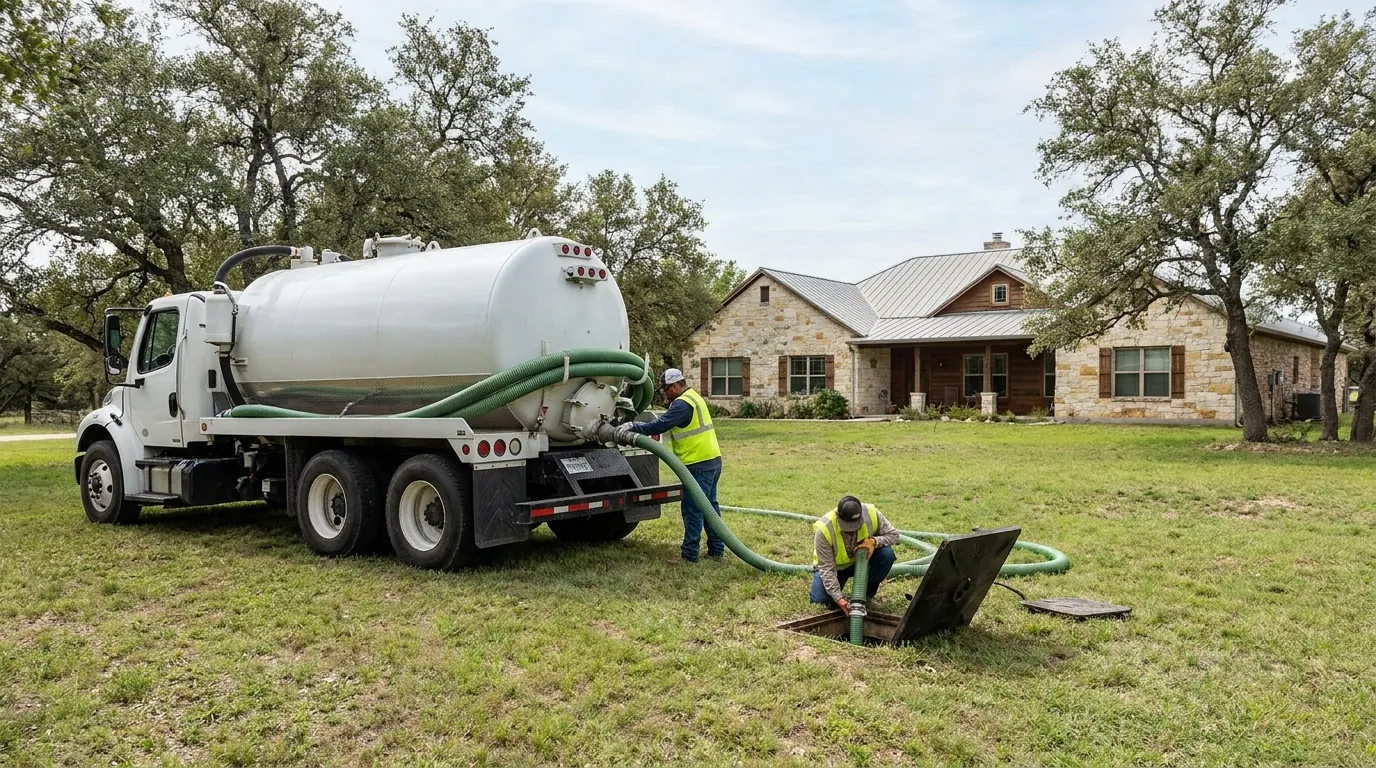
Schertz sits southwest of New Braunfels along the I-35 corridor and has grown into a substantial suburb, but growth doesn't reach every lot. On the city's outer edges and in older pockets, plenty of homes still rely on septic systems. Those owners need the same dependable septic tank pumping as any rural property, even with subdivisions filling in around them.
The soil under Schertz is the region's familiar expansive clay. It holds water and drains slowly, and it moves with wet and dry cycles enough to stress older tank lids and drain lines over time. When one of the area's sudden storms saturates the ground, a tank that's overdue has almost no cushion, and that's when backups tend to appear.
Because Schertz mixes newer and older housing, we often see systems whose service history is unclear. If you're not sure when your tank was last pumped, a pump-out combined with a septic tank cleaning resets the clock and gives you a clean starting point.
Septic services for Schertz homes still on septic systems.
Scheduled pump-outs for homes on Schertz's outer lots and older streets.
Full cleaning for tanks with an unknown or long service history.
Condition checks for buyers and owners of septic-served Schertz homes.
Fast response to backups and alarms after heavy storms.
Not sure when your tank was last pumped? We'll get it emptied, inspected, and back on a schedule.
Serving Schertz and surrounding communities along I-35.
Yes. Despite the city's growth, homes on outer lots and in older areas often remain on septic systems that need regular pumping just like rural properties.
A pump-out combined with cleaning gives you a fresh start and lets us note the tank's size and condition. From there we can recommend a service interval you can plan around.
Schertz's clay soil drains slowly, so heavy rain saturates the ground around the drain field. A tank near capacity then has no room to hold effluent, which pushes the whole system toward a backup.